 Free consultation


Automation of key issuance in a car dealership using a physical key box and a dedicated web system
Project description
L’emir Sp. z o.o. approached us with the intention of implementing a revolutionary model of fully contactless vehicle service, which was to combine a physical key box with a service application for customer communication. The goal was to create a solution allowing for the entire process to be carried out, from handing over the keys at car intake, through order processing and status communication, to the final vehicle release. The developed platform integrated locker management, key handover automation, order management, and customer communication into one cohesive system. As a result, the dealership could significantly relieve advisors, improve customer comfort and convenience, and prepare a solution ready for implementation in subsequent locations.
About the client
L’emir Sp. z o.o., operating as an authorized Škoda dealer and service center, serves a wide group of customers utilizing both new vehicle sales and after-sales services. For years, the company has focused on high-quality service and implementing solutions that streamline the work of advisors and enhance customer comfort.
The growing number of service visits and the need to provide predictable, convenient, and modern service prompted the organization to invest in process innovations. One of the priorities became creating a service model that would reduce the burden on advisors, shorten interaction time with the customer, and enable some processes to be carried out in self-service mode. It was in this context that the concept of a fully contactless vehicle service path was born, intended to become another hallmark of quality and modernity for the Škoda L’emir dealership.
Initial requirements
Škoda L’emir approached us with a clearly defined ambition: they wanted to realize a revolutionary idea for fully contactless vehicle service, based on combining a key box with a service application for customer communication. The board and service management were looking for a way for the customer to drop off and pick up keys at any time and track work progress in real-time, while simultaneously relieving advisors of repetitive tasks at the counter.
At the stage of initial discussions, the client had a vision of the target service customer experience, but detailed operational scenarios and technical requirements were not yet fully described. For this reason, Škoda L’emir requested consulting support, workshops, and the preparation of the solution architecture and a backlog that would allow the contactless service concept to be translated into a cohesive, scalable system ready for production work.
Challenge
The project was to deliver a solution that would handle the entire service process in a secure and fully automated manner, which is why demanding design areas appeared right at the beginning. One of the most important challenges was to include the procedure for issuing a replacement car, which requires strict confirmation of the customer’s identity and full compliance with the security processes in force at authorized service centers.
The second key challenge was ergonomics and user experience. The project was highly innovative, which meant that the dealership’s customers were encountering a new way of service requiring a well-thought-out step-by-step path. The key box interface, communication with the service application, and the processes planned from the first contact until vehicle pickup had to be intuitive and simple so that every user could easily handle the device and system messages.
Complexity was also increased by a wide range of scenarios related to key handover. The system had to react correctly to unusual situations, such as an attempt to leave the wrong item in the locker, the need to reopen the locker, errors in data entered by the customer, or failure to pick up keys at the scheduled time.
Project goals
Together with the Škoda L’emir team, a set of business and technical goals was defined to provide direction for the entire undertaking and ensure the consistency of the new service model.
Business goals
- providing customers with the ability to hand over and pick up keys at any time in a fully contactless manner, incorporating the key box as a central element of the service path
- reducing the burden on service advisors by automating repetitive tasks such as vehicle intake, data verification, and key issuance
- creating a cohesive process covering all stages of the customer visit, from car intake to pickup and potential issuance of a replacement vehicle
- improving service quality through transparent communication with the customer, up-to-date information on order status, and the ability to submit comments in the system
- shortening on-site service time at the dealership and reducing the number of queues at the reception
- preparing a solution that can be implemented in subsequent locations as a service standard for the Škoda brand.
Technological goals
- designing a unified system supporting service processes, customer communication, and the operation of the physical key box
- ensuring a high level of data security, particularly in the replacement car issuance process requiring user identity confirmation
- creating an intuitive interface and logical user paths to minimize the risk of errors and unclear situations
Solution description
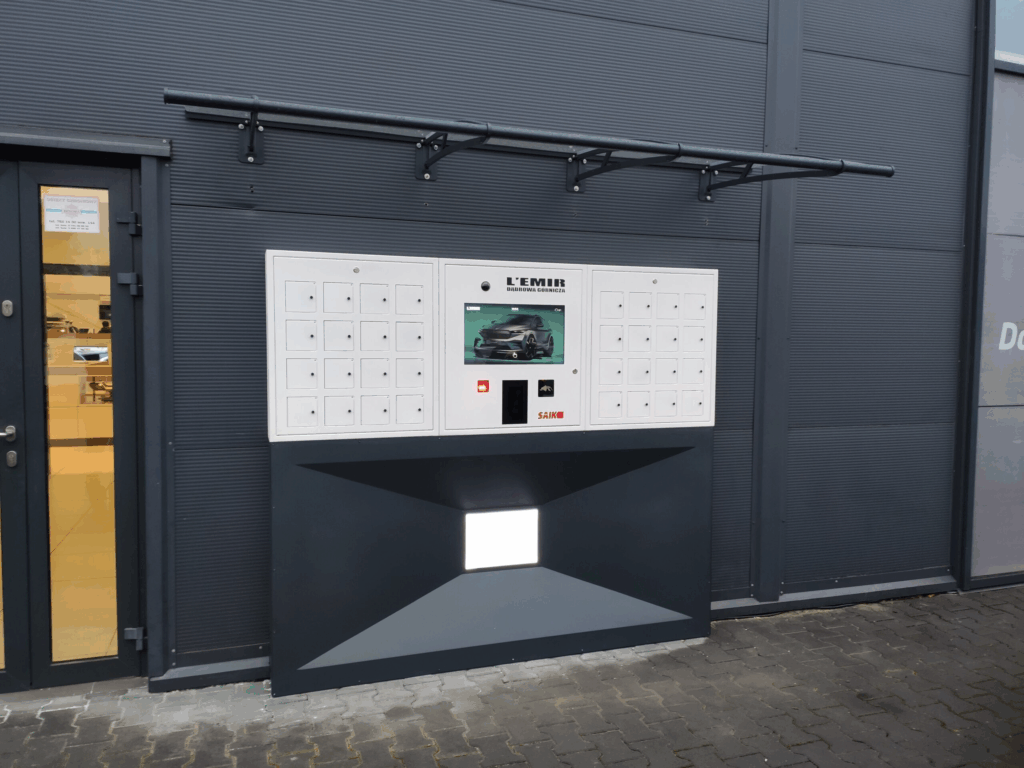
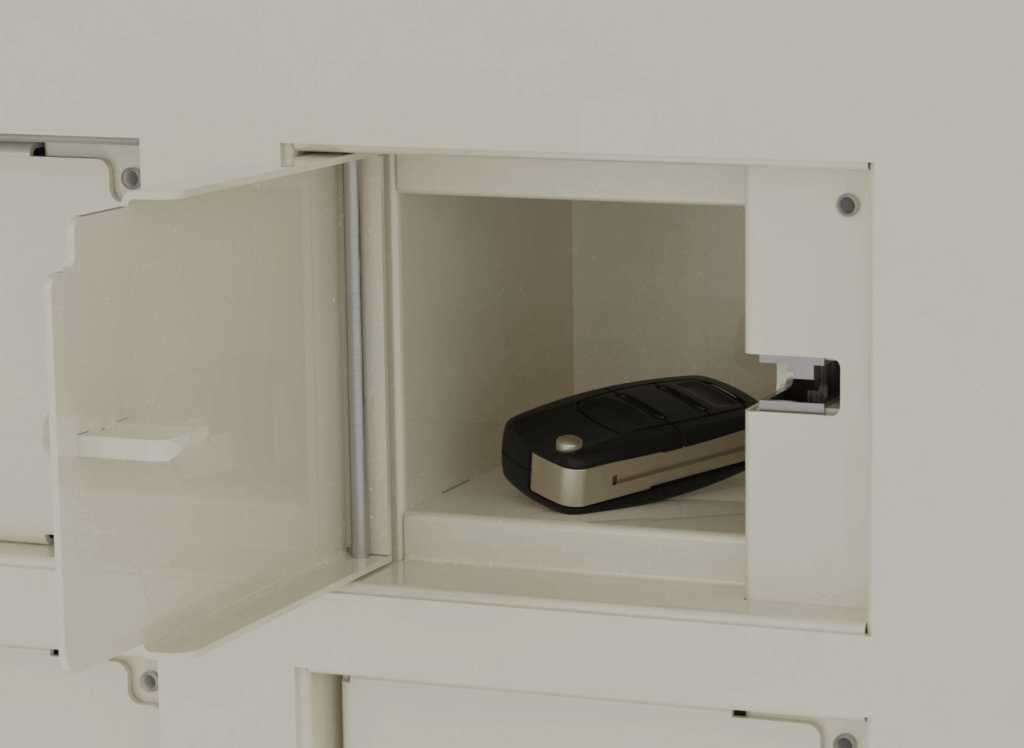
The designed solution combines the SAIK key box with a complete service platform that guides the customer through the entire vehicle service process – from contactless key handover, through the execution of service work, to the release of the car or a replacement vehicle. The central element of the system is the SAIK key box software, responsible for locker management, lock operation, displaying messages on the screen, and recording all user interactions. This module has been closely integrated with the application layer, so every locker movement and every customer decision is immediately reflected in the service system.
In the case of issuing a replacement car, the system utilizes integration with Kontomatic, which enables identity verification through electronic banking. Thanks to this, the customer can independently pick up the keys to the replacement vehicle from the key box, and the service center gains certainty that it is handing over the car to the correct person.
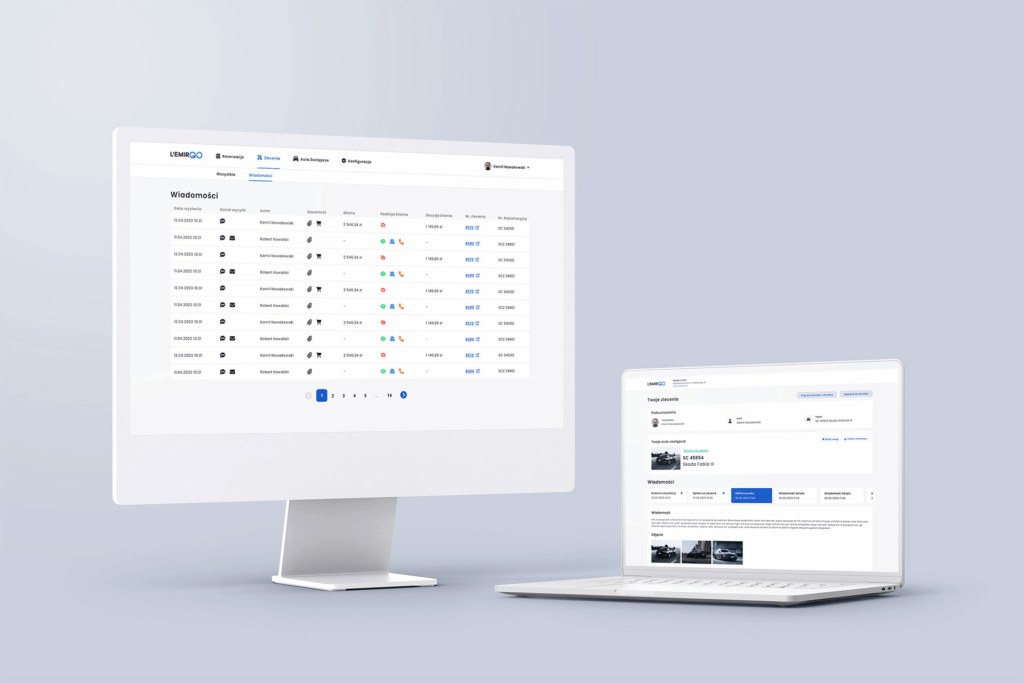
Communication with the customer takes place entirely remotely and without the need to install an application. After starting the order, the customer receives an SMS with a MagicLink, which leads to a personal service path in the browser. There, they can check the status of the work, receive notifications, go through the key pickup process, and confirm activities requiring interaction.
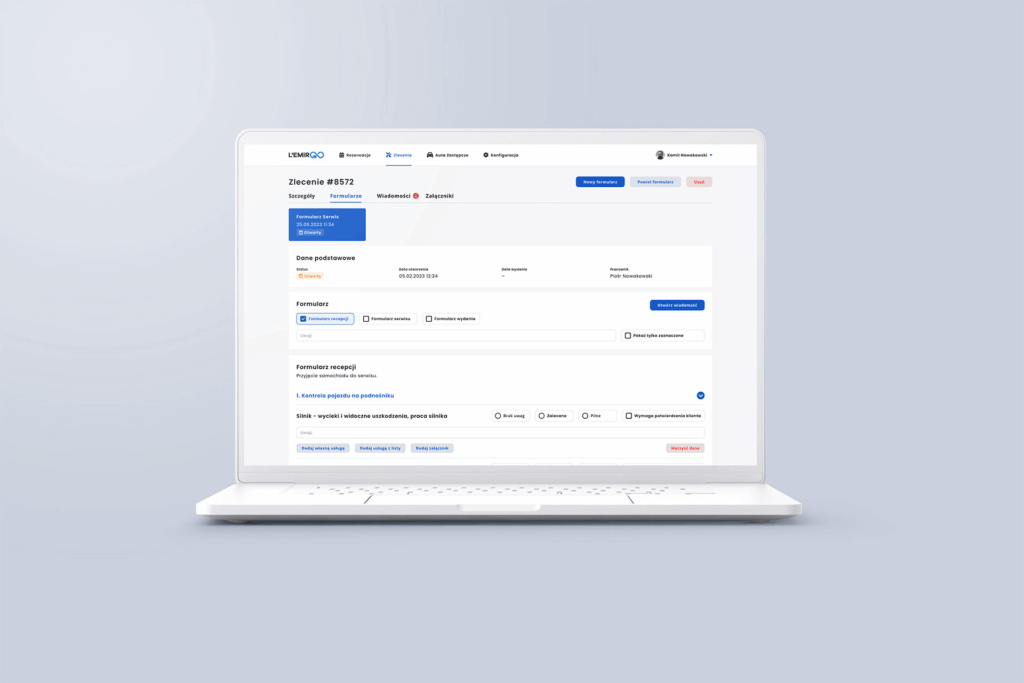
The system also supports full handling of additional service work. If technicians identify work requiring approval during diagnosis, the customer receives a notification along with an estimate. They can accept or reject the proposed actions without the need for telephone contact.
After the work is completed, the customer can pay for the service entirely remotely using the provided payment link and then download the invoice. Only after the payment is processed does the system provide instructions and enable the vehicle to be picked up from the key box.
The entire process also handles unusual scenarios, such as incorrect items left in the locker, the need to reopen the locker, or delays in pickup. The system records every event and synchronizes it with the service panel, allowing advisors to react quickly and maintain full control over the process.
The result is a solution that operates at the intersection of a physical device and an advanced IT system, ensures a high level of security, automates the most important stages of the visit, and allows the customer to handle the entire service path – from key handover to final settlement and vehicle pickup – without the need to visit the reception.

Results and business effects
The implemented solution significantly improved the work of the Škoda L’emir service center, as it automated key stages of the visit and allowed customers to go through the entire service process independently. The most important result was the creation of a path that guides the user from key handover, through the acceptance of additional work and payment, to vehicle pickup, without the need to wait in line or contact an advisor.
Service automation and relieving advisors
Thanks to the integration of the key box with the service system, the number of repetitive tasks performed by advisors has decreased, as car intake, work status, and vehicle pickup can take place fully in self-service mode.
A new level of security when issuing a replacement car
Identity verification via Kontomatic introduced precise customer confirmation, which increased the security of issuing replacement vehicles and reduced the risk of incorrect car handover.
Higher transparency and faster communication with the customer
The MagicLink sent via SMS enabled easy order tracking, acceptance of additional work, and access to information about costs and visit status. Customers receive answers faster and contact the service center by phone less frequently, which reduces the team’s workload.
Remote approvals, payments, and immediate vehicle pickup
The customer can accept additional work immediately after receiving the estimate, and after the service is completed, pay for the service remotely and download the invoice. This allows the visit to be completed faster and without the need to wait at the counter.
Better process visibility and full control over orders
Every event related to the locker, key box operation, and customer interaction is recorded and immediately visible in the system, which facilitates process supervision and reduces the number of operational errors.
Strengthening the image of an innovative service center
The new service model improved the user experience and emphasized Škoda L’emir’s image as a modern, convenient service center focused on process automation.
Readiness to scale the solution in subsequent locations
The system architecture was prepared so that it can be implemented in other dealerships, paving the way for service standardization and developing the solution across the entire network.
As a result, the project brought clear operational benefits, increased process security, and raised the quality of the customer experience, creating a foundation for further digitalization of service offerings.
Customer testimonial
Collaboration with the programming team went very smoothly and gave us the feeling that the project was in good hands. From the beginning, we could count on a full understanding of our needs and a proactive approach to process design. We are very satisfied with the cooperation and the results achieved. The project met our expectations, and the solution provides us with a solid foundation for further digitalization and implementing similar models in subsequent locations.

