 Free consultation


From paper cards to predictability: digital route and fuel settlement
Key Information
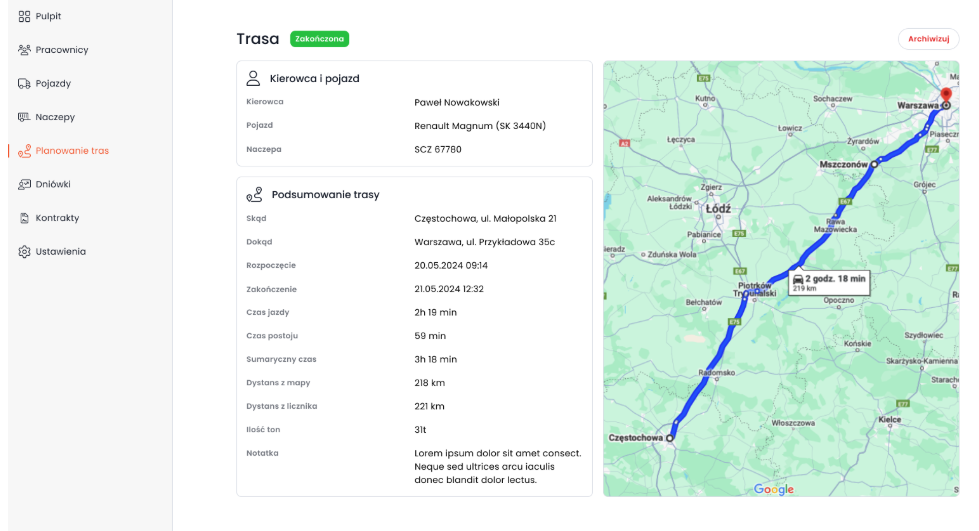
GoMobility designed and implemented a modular system that digitizes road cards, working time records, and fuel settlements in a transport company managing a multi-vehicle fleet. The platform combines driver work, telemetric data, contracts, and automatic settlements in one place, creating a consistent and reliable source of data – from the first kilometer to monthly summaries. As a result, settlement time was reduced from several days to one day, data discrepancies were eliminated, and management gained real-time insight into contract profitability and fuel consumption. The system architecture was designed for scalability and easy integration with existing TMS, ERP, and telematics systems, while ensuring high reliability and data security.
Company Information
Due to a non-disclosure agreement (NDA), the client’s name cannot be revealed. However, we can indicate that it is one of the largest entities in Poland specializing in the construction of road and rail infrastructure. The company carries out projects with a high degree of technical complexity, covering both large public contracts and commercial investments.
The company’s fleet consists of approximately 200 vehicles, including trucks, dump trucks, excavators, rollers, and other construction and transport equipment. The scale of operations means that the company functions in an environment of a diverse machinery park and many task execution scenarios — from material transport to field work requiring precise reporting of time, mileage, and fuel consumption.
In such a dynamic environment, the key operational challenge became the consistency of data on equipment utilization and the ability to quickly settle them between the logistics, finance, and project departments.
Inquiry and Client Expectations
The client approached GoMobility with a request to analyze the possibility of digitizing the process of handling road cards and fuel settlement. The previous model was based on paper documents and Excel spreadsheets, which were filled in manually by drivers and equipment operators. This process generated a high administrative burden and caused reporting errors.
The client’s team expected a solution that:
- simplifies the daily work records of drivers and operators,
- allows for automatic linking of odometer and telematics data with contract settlements,
- ensures transparency and control over fuel consumption,
- can be implemented iteratively, without interrupting current operations.
In the first conversation, the client assumed that creating a digital equivalent of a road card would be enough; however, GoMobility’s pre-implementation analysis showed that integrating the entire process — from the moment a driver starts their shift to the automatic generation of summaries for the finance department — would bring significantly more value.
Challenge
The biggest challenge of the project turned out to be transforming long-standing, deeply rooted operational processes into a consistent, digital system. Over the years, the organization had developed its own methods for recording routes, working time, and fuel consumption — tailored to the needs of individual contracts and construction managers. Although flexible, these processes were difficult to unify and standardize, and every change required broad acceptance among field users.
The second area of difficulty was the strong dependence on Excel spreadsheets, which allowed for almost unlimited freedom in creating exceptions, formulas, and individual settlement methods. For users, this provided convenience, but from a data management perspective — it caused a lack of control, a lack of unambiguous business logic, and vulnerability to errors.
The third significant challenge was the fragmentation of telemetric and fuel data. The vehicle monitoring system and fuel probes were not closely linked to route and shift data, meaning the assignment of refueling and mileage to specific tasks was done manually. This led to a blurring of settlement logic and limited ability to verify fuel consumption efficiency.
Designing the new system therefore required not only creating software but, above all, reconstructing existing processes in a way that maintains the flexibility of field users while ensuring consistency and automation at the organizational level.
Project Goals
Together with the client’s team, goals were defined to combine the operational needs of drivers and operators with management’s expectations regarding reporting, costs, and predictability. The goals were defined in a measurable and strategic way, covering both organizational and technological aspects:
- Digitization of the route and shift settlement process – replacing paper road cards and Excel spreadsheets with a single, consistent system accessible from a browser and mobile application.
- Automation of data flow – linking data from telematics, odometers, and fuel probes with road cards and contracts to eliminate manual entry and corrections.
- Standardization of settlement rules – mapping exception logic and business rules in the system in a controlled, maintainable, and auditable manner.
- Increasing cost transparency – providing managers and finance departments with access to reliable reports on fuel consumption, mileage, and contract profitability in real-time.
- Reducing settlement time – limiting the monthly data compilation process from several days to a few hours thanks to automation and centralization of information.
- Ensuring scalability and integration – designing an architecture ready to cooperate with other TMS, ERP class systems, and telemetric tools, with the possibility of further expansion.
Solution Description
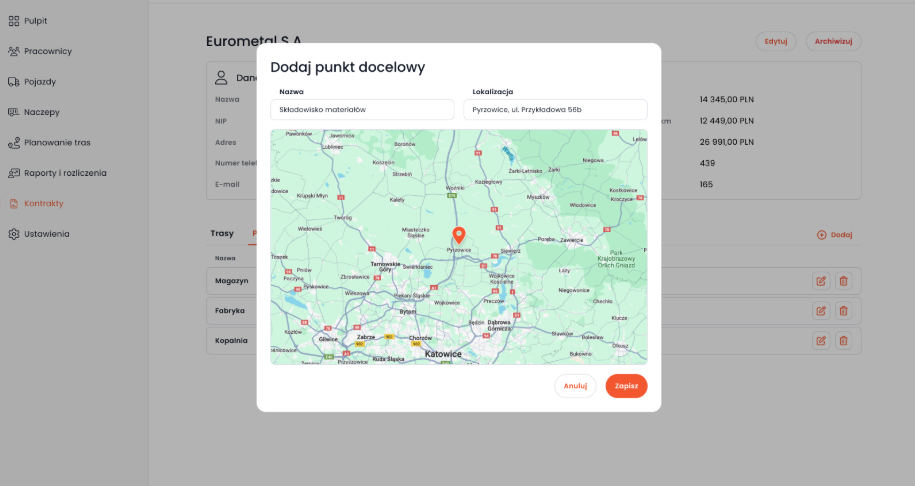
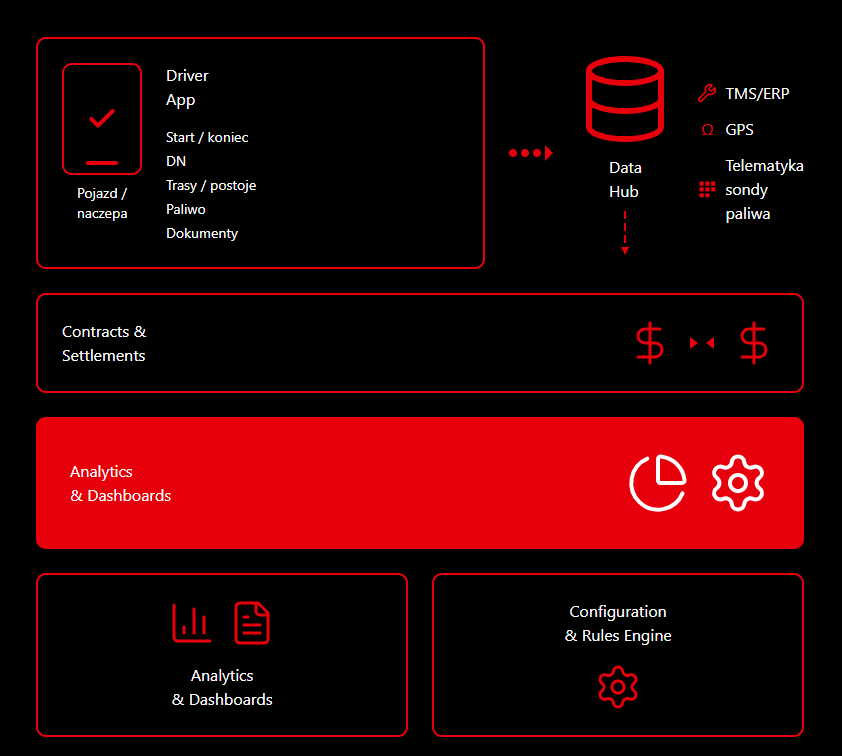
The GoMobility team designed and implemented a comprehensive road card handling system that combined data from various sources – drivers, telematics, fuel probes, and contracts – into one consistent analytical and operational environment. The system was developed in a modular and scalable architecture, allowing for its further development and integration with external TMS, ERP class systems, and telemetric platforms.
Key Architectural Assumptions
- Mobile layer (Driver App) – a web application available on the devices of drivers and equipment operators. It allows starting and ending a shift, selecting a vehicle and trailer, completing a checklist, recording routes, stops, and refueling, and adding photos of documents (e.g., delivery notes).
- Integration layer (Data Hub) – responsible for collecting and synchronizing data from telemetric systems, fuel sensors, and vehicle odometers. The data mapping and validation mechanism eliminates errors resulting from differences in formats and measurement frequency.
- Business layer (Contracts & Settlements) – the logic for processing operational data into contract settlements. The system automatically groups routes into shifts, assigns them to projects, and applies defined settlement rules (hourly, kilometer, tonnage rates, 60 km thresholds, etc.).
- Analytical layer (Analytics & Dashboards) – panels for logistics managers, finance, and management. They contain reports on fuel consumption, fleet utilization efficiency, comparison of planned and actual routes, as well as alerts for deviations and anomalous refueling.
- Administrative layer (Configuration & Rules Engine) – a configuration panel allowing for the independent definition of settlement rules, cost thresholds, vehicle types, rates, and measurement units without programming intervention.
The system was designed in the spirit of operational predictability – every field event automatically translates into an update of settlement and analytical data, allowing managers to react to deviations during contract execution rather than only after its completion.
The implementation of the system by GoMobility brought the client measurable operational and strategic benefits. Digitizing the road card handling process was not just an administrative improvement — it became the foundation for managing costs, productivity, and the predictability of fleet operations.
Key Results
- Settlement time reduced by 80% – monthly summaries that previously required 2–3 days of work in Excel are now generated within a few hours thanks to automatic processing of data from telematics and road cards.
- Reduction of errors and discrepancies by over 70% – the elimination of manual data transcription and standardization of exception logic significantly improved the quality of financial and operational reports.
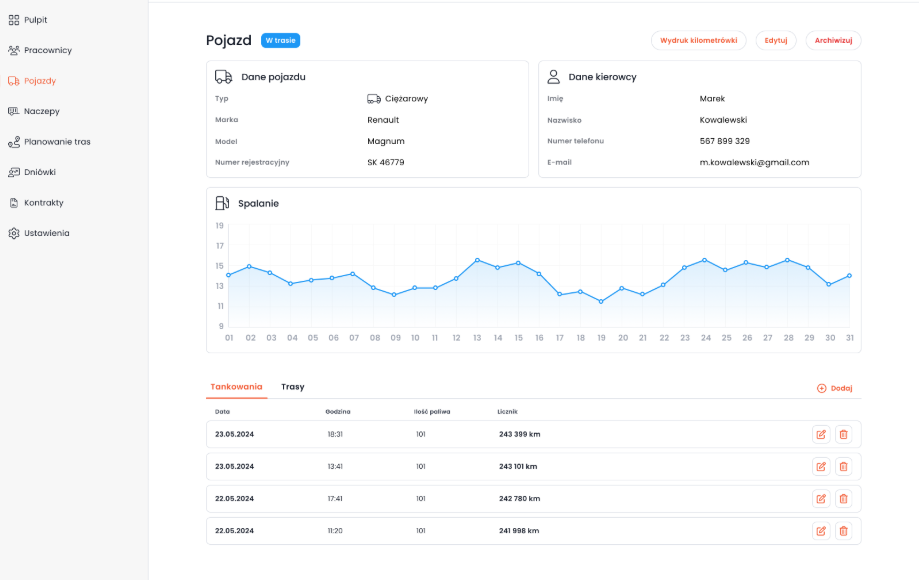
- Full transparency of fuel consumption – every refueling is automatically assigned to a shift and contract, enabling quick detection of anomalies, discrepancies, and potential fuel losses.
- Increased fleet utilization efficiency – analysis of routes, downtime, and driving style allowed for better task planning and reduction of unproductive vehicle working time.
- Integrated reporting for management – logistics, finance, and contract managers gained access to a common KPI panel, enabling the analysis of project profitability on a daily and monthly basis.
The system implemented by GoMobility not only improved processes but changed the way the organization manages data and decisions in the area of transport and construction equipment – transforming settlements from an administrative activity into a source of strategic information on operational efficiency.
Client Testimonial
This implementation changed the way we think about data. Previously, we treated settlements as an administrative obligation — today they are a source of knowledge about contract profitability and equipment efficiency. The GoMobility team perfectly understood our specifics and designed a solution that combines ease of use for the driver with analytical precision for management.
— Logistics and Equipment Manager

