 Free consultation


Dedicated IT systems for the TSL industry that work – fast, reliably, without compromises
We design and implement dedicated solutions for the TSL industry – with full integration with logistics systems, enterprise-class security, and architecture ready for scaling. Whether you need a web or mobile application, we will get it done.
We understand the challenges you are facing
We know that the TSL industry faces a huge challenge. On the one hand, customer expectations regarding speed, reliability, and transparency of operations are growing. On the other – IT systems in many organizations are outdated, difficult to integrate, and not adapted to support modern technologies such as IoT, AI, or advanced data analytics.
Choose the problem that affects your company
Box systems versus custom processes
Ready-made TMS, WMS systems, or freight forwarding platforms available on the market offer a set of standardized functions that are often too general, unadapted to the real operational procedures of your company.
Attempts to “fit” a box solution to non-standard processes end in workarounds, Excel sheets, and the need to manually merge data. Often, the change process itself takes a very long time, and costs exceed the implementation of dedicated software.
As a result, instead of automating – the IT team has to create additional integrations, and operations run on semi-automatic, difficult-to-maintain paths.
How do we solve such cases?
We design systems that are built around processes, not the other way around.
Instead of adapting your company to a rigid scheme imposed by a ready-made product, we analyze how your team works – and only then design modular, tailored solutions.

Difficulties integrating modern technologies
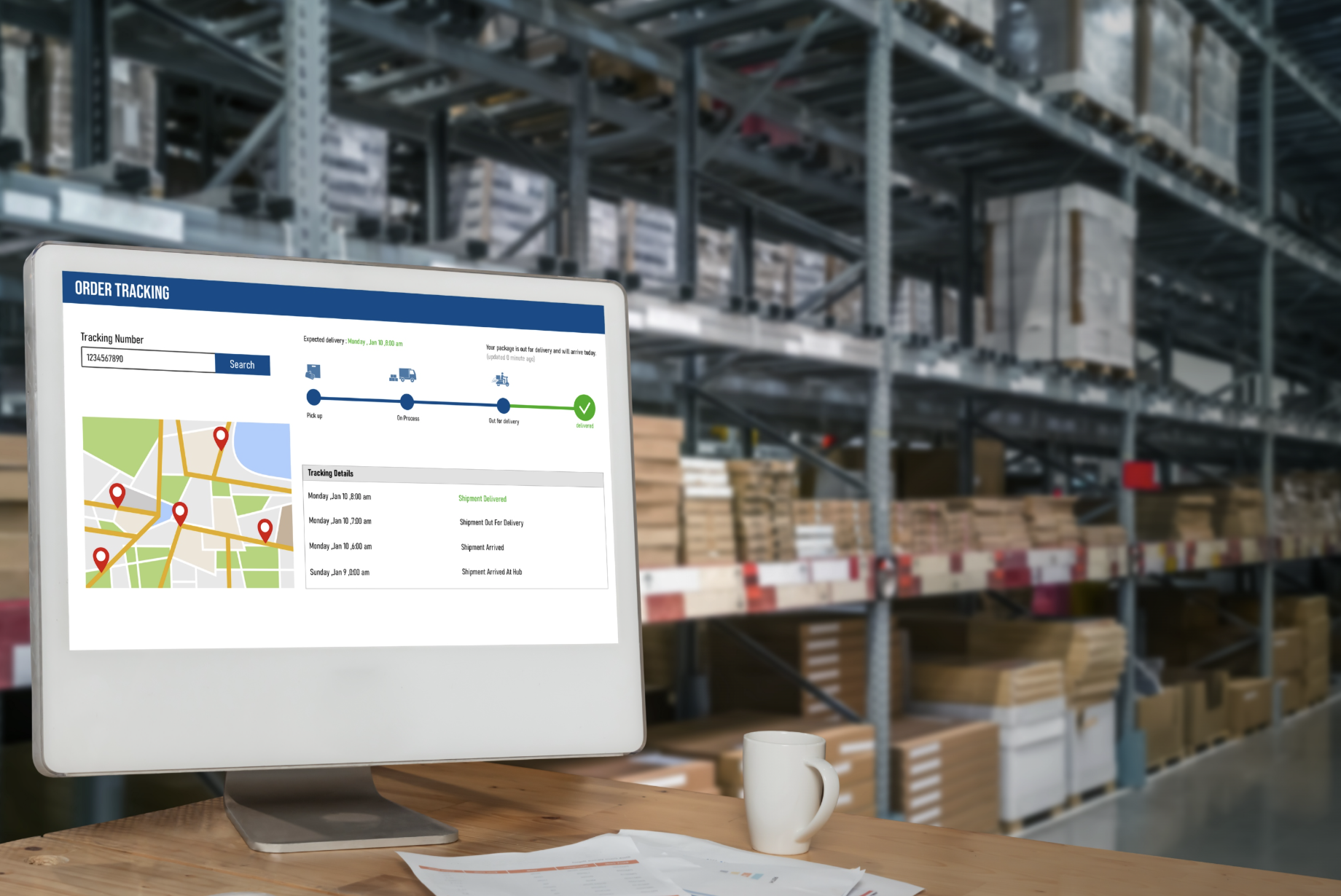
The need for communication with GPS devices, tachographs, temperature sensors, WMS, FMS systems, or Trans.eu is becoming increasingly crucial for effective fleet and supply chain management.
Problems with real-time data synchronization, lack of a uniform data format, or instability on the provider’s side cause data to be incomplete, late, or completely unavailable when needed most.
How do we help?
We build secure communication gateways, data adapters, and buffers resistant to disturbances in data processing from devices and external APIs. Our solutions ensure stable synchronization in real-time, regardless of the instability of external providers.
Data in silos instead of
in one ecosystem
Information about the fleet, loads, clients, or notifications is scattered across several systems – Excels, emails, carrier and forwarding systems. Each department uses different tools that do not communicate with each other.
Difficulty in generating reports, audits, settlements with clients, or monitoring SLAs means that business decisions are made based on incomplete or outdated information.
How do we support?
We create consistent integration layers (ETL/API/ESB), design central data repositories and BI panels with views tailored to roles and processes. Result: one single source of truth and full control over operations.

If any of these problems sound familiar – it means we understand the realities of your work. Our teams have worked with companies similar to yours. We helped them modernize infrastructure without chaos and downtime.

Kamil Fuss
Head of Business Development
Book a free consultation
If you are struggling with IT challenges, contact us to find out how we can help you.

Why TSL industry leaders choose us

Industry know-how
& understanding of TSL processes
We don’t build software “for everyone”. For years, we have been working with transport, logistics, and forwarding companies. We know what ramps, CMR, fulfillment, OTIF, Telematics are, we know the difference between LTL and FTL, we know how PTV, TMS, WMS platforms work.
Effect: We understand industry terms and don’t waste time on explanations, allowing us to move faster to designing and delivering value.

High pressure on ROI
measurability of effects and predictability of investment
Every IT initiative must not only work but bring measurable business value. Boards expect precise data: “What exactly will we get, for how much, and when?”, and IT teams must provide these answers even before the project starts. We work according to the DSDM methodology – an Agile framework that emphasizes early delivery of business benefits, constant budget control, and prioritization of functions according to real value.
Effect: During cooperation, we maintain full transparency – thanks to timeboxes, clear business and technical roles, and constant budget monitoring, the client has a real influence on the project course and can make informed investment decisions.

Full documentation
standardization and transparency – zero vendor lock
We know that one of the biggest threats in IT projects is dependence on a single vendor. We conduct every project based on standardized documentation models: logical architecture, data structure, process flow, API, infrastructure configuration. We document and pass full project knowledge to your team – including code, backlog, tests, repositories, configuration files, and prioritization of functions according to real value.
Effect: You have full control over the future of the system – without blocks, without dependencies, without risk.
Combination of industry knowledge, business methodology, and technical transparency
It is these three elements that make projects with us end in business success, not just technical success. Therefore, TSL leaders choose our solutions.
Your partner in digital TSL transformation
We know how the TSL industry works – we understand your world, processes, abbreviations, and operational realities, which is why we don’t start with learning, but with delivering value.
Working in the DSDM methodology, we focus on what really counts: measurable effects, predictability, and full control on your side.
And when the project comes to an end, you are not left with a “black box” – you have documentation, open standards, and a system you fully control.


What systems do we create?
We create dedicated IT systems for the TSL industry that go beyond classic automation. We use artificial intelligence and AI agents so that systems not only register data but also analyze, recommend, and take action in real-time.
We create systems that solve real
problems of the TSL industry

Fleet and vehicle management systems
Maintenance planning, integration with tachographs, GPS and telematics, fuel consumption monitoring, and predictive service alerts. AI agents analyze data from telematics and IoT to automatically indicate maintenance priorities.

Dedicated systems for transport and warehouse management
Solutions supporting comprehensive operations handling – from notification and time slots, through route planning and shipment tracking, to full integration with ERP and forwarding platforms (e.g., Trans.eu, Tranporeon).

AI-supported systems
Applications that analyze historical and current data to predict delays, optimize routes, forecast costs, and automatically classify documents. AI allows not only reacting to events but also preventing them.

Integrations and middleware
We connect existing systems into one coherent ecosystem – from SAP and Dynamics to IoT and transport platforms. We design APIs, EDI integrations, and event streaming solutions that enable real-time data exchange.

Process automation systems
From automatic issuance of transport documents and invoices to intelligent customer service workflows and transport cost settlements. We eliminate manual actions and shorten operation times.

IoT-based systems
Solutions collecting and processing data from sensors: temperature, humidity, geolocation, or RFID. Thanks to IoT, you monitor loads and vehicles in real-time, react to deviations, and ensure compliance with customer requirements.
Modular architecture
Each of these systems is built based on a modular architecture, which allows you to start from one area (e.g., fleet or IoT integration) and then develop the solution according to the needs and pace of your organization.
Need a dedicated solution?
We tailor every project to the specifics of your company. We start with needs analysis and end with the implementation of a system that actually solves your business problems.
Business benefits for TSL companies
Our systems are more than just technology – they are a strategic tool for building competitive advantage. In a world where customers expect speed, transparency, and reliability, we support TSL companies to be a step ahead of the competition.
A process that guarantees predictability and quality – from analysis to implementation
Lower costs, faster operations, full transparency, and stability – that is, a set of advantages that make your company win tenders and acquire the most demanding customers.


Our approach – from workshop to independence
Every project in the TSL industry requires not only technology but also a methodical approach and transparency. Therefore, we conduct projects based on a proven model in which analysis, documentation, and standardization are as important as the code itself.
Our 5-step implementation process
From workshop to independence – a methodical approach guaranteeing the success of every project
Step 1
Workshops and process mapping
If you don’t have a ready specification – we start with workshops. Together we map processes and requirements, identify the context and success criteria.
Documentation is an integral part of this stage – created from the very beginning, it includes system architecture, requirements, and acceptance criteria.

Step 2
Proof of Concept (PoC) for uncertain areas
When elements of uncertain feasibility appear, we create a PoC to quickly verify technical possibilities and business benefits.
Each project is supported by a dedicated business-system analyst who is responsible for clarifying requirements and translating them into technical language – minimizing the risk of misunderstandings.
Step 3
Standards, communication, and start of implementation
Before starting, we define implementation standards, communication channels, and the reporting model. We train the Product Owner on the client’s side and set the first implementation budget.
Our teams work based on strict code quality standards – code review, CI/CD, automated tests, and consistent architectural patterns. Thanks to this, the project is predictable from the beginning and easy to develop further.
Additionally, we use proven code creation methodologies, such as Clean Architecture, CQRS, or Domain Driven Design. This directly translates into modification speed, system stability in case of changes, and ease of introducing new people to the team.

Step 4
Transparent implementation and cooperation with the client’s team
We regularly present work results to the Product Owner and organize meetings with end users to verify expectations. Both work and costs are reported periodically.
If the client has their own developers, we join forces in one team – ensuring code consistency, shortening implementation time, and knowledge transfer to the internal IT department.
Step 5
Project finale and handover
At the end of the project, we hand over the system for maintenance to the client’s IT department or their own resources. Alternatively – we can take over responsibility for maintenance and further development of the solution, which allows avoiding risks related to staff shortages, and at the same time ensures stable development of the system in the long term.
Thanks to full documentation and standardization, the client maintains full control and independence – without fear of vendor lock-in.

Ready to talk about your needs?
Let’s schedule a free consultation. We will talk about the challenges in your company and show you how our solutions can help solve them.


Security, compliance
and reliability
Every project in the TSL industry requires not only technology but also a methodical approach and transparency. Therefore, we conduct projects based on a proven model in which analysis, documentation, and standardization are as important as the code itself.
Cybersecurity from architecture to code
We design systems according to the security by design principle – from architecture, through the development process, to tests. We implement data encryption, access control (IAM, SSO, MFA), log monitoring, and automatic security alerts. Every code is subjected to code review and security tests compliant with OWASP.
Compliance with regulations and standards
Our systems meet GDPR requirements, and processes are prepared for industry audits. We document all elements – from data flow to authorization matrices – so that the client’s IT department has full transparency and control.
High availability architecture
We design solutions resistant to failures and scalable in real-time: server clusters and load balancing, disaster recovery mechanisms and backups, 24/7 monitoring with automatic notifications.
Thanks to this, systems remain available even in critical situations, and the risk of downtime is minimal.
Effect?
Your organization operates without disruptions, client and partner data is fully protected, and systems meet legal and industry requirements. This means peace of mind, predictability, and security for both the IT department and the entire business.
What project do you want to implement?
Tell us about your challenges in the TSL industry. Our experts will prepare a dedicated solution for your company.
Why TSL companies choose us
TSL companies choose us because we understand that web development in logistics is not a “website” – it is operational infrastructure.
Logistics infrastructure
In an industry where delivery time counts in minutes and delays in seconds, there is no room for downtime and chaotic implementations.
We combine software engineering competencies with experience in integrating critical TSL systems, creating solutions ready for continuous operation and changing customer requirements
5 components that make a difference:

API-first architecture
Free integration with any system in the TSL ecosystem.

Horizontal and vertical scaling
Cloud-native, microservices, optimization for high data volumes.

Full observability
Logs, monitoring, alerts in real-time.

Secure CI/CD processes
Automated tests, versioning, deployment without downtime.

Compliance and security
Compliance with legal and industry standards (e.g., eFTI, ISO 14083)

They trusted us – web solutions that actually changed operations in TSL
See how web applications work in critical logistics processes.
24/7
Reliability of systems in a production environment
99,9%
Availability of business-critical applications
<2s
Average response time at peak loads
Below are examples of projects where web development became a real tool for competitive advantage.
Case study
International logistics operator – B2B track&trace platform

Problem
The company operated in 14 countries and used several inconsistent track&trace systems with different data formats. B2B customers had to log into separate portals depending on the country, causing chaos and loss of brand consistency.

Solution
- Creation of a central web platform integrated with 9 different TMSs and fleet systems.
- Unified interface in 6 language versions, SSO login for international clients.
- API enabling clients to download data directly to their own ERP systems.

Effects
- 100% of B2B clients use a single portal (no dispersed access).
- Maintenance costs reduced by 42% (end of duplicating systems).
- Increase in automated API queries by 350%, relieving the service department.

Head of IT
“This is the first time we have full visibility of shipments across Europe in one tool. Integration with our customers works exactly as it should.”
Case study
FMCG Manufacturer – Order Portal and ESG Reporting
Problem
The sales and logistics department worked in different systems, and orders were placed by email or phone.
There was also a lack of a tool for reporting the carbon footprint of shipments in accordance with ISO 14083 and CSRD requirements.
Solution
- Creation of a web portal for clients and logistics partners integrated with ERP and TMS.
- Module for calculating CO₂ emissions for each shipment, compliant with GLEC Framework.
- Automatic generation of ESG reports to PDF and CSV formats.
Effects
- 87% of orders placed through the portal within the first quarter.
- Reduction of order errors by 64%.
- ESG reports available instantly, without involving the IT department.

Head of IT
“It didn’t just simplify ordering – it completely changed our reporting culture. Now we have ESG data ‘on demand’, not after a month.”
Turn technology into
real operational advantage
Every day with a malfunctioning or limited system means lost orders, delays in deliveries and strained relationships with customers.
Design a web application with us that will connect all your systems, speed up processes, and ensure data security. From integration workshop, through development, to full observability – we create a tool that works in the rhythm of your business.
Thanks to our method:

You have full control over the scope, schedule, and quality of implementation.
Your integrations work without duplicating data and manual workarounds.
KPIs, SLAs, and operational data are visible in real-time.

Don’t put this off until “after the season” – by then the competition will already be a step ahead of you.
Choose a path of action

Free consultation
An online meeting during which we will analyze your needs, indicate integration possibilities, and propose a web architecture.
Discovery workshops
Intensive technical workshop where we will jointly define the architecture, integrations, and implementation roadmap of your system.
Phone call
Direct conversation with a technical expert. We will discuss your challenges and possibilities in 15-30 minutes.
All options are free and without obligation
We create software the way critical processes in logistics are designed.
We combine strategic consulting with technological knowledge to inspire TSL industry leaders and support them in the digital transformation process.


Our team
Our team consists of experts who believe that technology is the key to solving real challenges and creating the future.
In projects, we combine engineering competencies, knowledge of TSL processes, and experience in integrations with critical systems – from TMS and WMS to telematics, track&trace platforms, and ESG reporting systems.
What sets us apart

Specialization in TSL
We understand processes, terminology, and industry realities.
Scalable and secure architecture
Technologies selected for load and compliance requirements.

Process transparency
Full access to code repository, documentation, and progress reports.

Cooperation on equal terms
We speak the language of CTOs, not “IT service salespeople”.
Do you want to meet us in person?
Schedule a free consultation. We will talk about your challenges in the TSL industry and show you how our solutions can improve your processes.
What project do you want to implement?
Tell us about your challenges in the TSL industry. Our experts will prepare a dedicated solution for your company.
KAMIL FUSS
Head of Business Developments
“In TSL every second counts. That’s why we build systems that work reliably 24/7.”
What if it’s not the right time yet?
It is not always immediately clear what system should be built and what is worth investing in. Therefore, instead of starting with coding, we propose a workshop process that step by step guides the company through process analysis, assessment of automation potential, and preparation of project specifications.
Thanks to this process, you can first organize processes and prepare the organization, and only then enter the technology implementation stage. It is a safe, methodical way to start digital transformation in TSL.
Why is this important in the context of Web Development for TSL?
- Because creating a new web application without a clear map of processes, KPIs, and priorities can mean a costly investment “in the dark”.
- The workshop allows avoiding this risk and gives the management solid decision-making foundations.
If you feel that your organization first needs to answer the question “what for and where are we heading?”, and only then “how to do it?” – let’s start with this stage.
Our team of experts will help you chart a transformation path, embedded in the realities of your business and ready for implementation.

We live by what moves the digital world in TSL
Materials that may interest you

Full automation of airport parking operations
New system in three months, full automation of airport parking operations.

Corporate fleet gamification
Building the Gamecenter system – an AI platform for automating incentive programs and improving driving safety.

Innovative fleet management system
From data to advantage: Strategic technology consulting that turned a vision into a scalable system for global brands.










Visit us on YouTube!
Subscribe to our channel so you don’t miss the latest trends in TSL digitization, case studies of our clients, and practical advice for logistics industry leaders
Frequently Asked Questions
Have questions? Great – that’s a sign of a responsible approach. Below we have collected the topics most frequently raised by our clients from the TSL industry.
Do I need to have a ready specification to start cooperation?
If you do not have detailed documentation, we start with analytical workshops, during which we jointly map processes, identify requirements, and develop an implementation strategy.
Can I start with a small scope?
Yes. We work in a modular and iterative architecture – you can start from one area (e.g., fleet management or notifications) and then develop the system according to needs.
Can our internal IT teams cooperate with yours?
Of course. We work in a cooperative model – we integrate your developers with our team, ensuring consistency of code, standards, and process. This supports knowledge transfer and shortens implementation time.
What does project settlement look like?
Based on workshops and scope analysis, you receive a transparent implementation quote. We settle projects according to real workload, with the possibility of adjusting the scope during implementation, in accordance with the DSDM methodology.
How do you ensure security and GDPR compliance?
We design systems in accordance with the security & privacy by design principle. We implement data encryption, access control, event logging, and mechanisms compliant with GDPR and ISO 27001.
What if I’m not ready for implementation yet?
In this situation, we propose a workshop process that will help understand current processes, identify automation potential, and prepare a transformation plan with ROI analysis and recommendations.
Do you use artificial intelligence and AI agents?
Yes. We design systems using AI for prediction, route optimization, document classification, and decision automation. AI agents support, among others, fleet monitoring, customer service, and risk management.