 Free consultation


Zero downtime.
Full transparency. One partner.
Your systems are the foundation of your operations – a failure means downtime, frustration, and real losses. Instead of hoping for the best, gain a team that monitors, reacts, and documents everything from A to Z. You don’t have to do everything yourself. One partner who knows their stuff is enough.
They trusted us



Systems cannot stop. Neither can we.
24/7 maintenance for critical applications and environments – no vendor lock-in, no chaos, with ready-made emergency scenarios.
Your team can sleep soundly. We are ready – always.
3 key differentiators

24/7 Monitoring and alerts
Automatic anomaly detection using Azure Monitor and Log Analytics

Team ready for action
On-call mode, escalations according to runbooks, predefined scenarios

Transparent SLA and reporting
Enterprise-class SLA – response time, recovery time, number of incidents
Downtime costs more than service hours – it costs trust, reputation, and results. That’s why our service doesn’t end with a “ticket”. It’s a complete structure ready for incidents – and before they happen.
Why do TSL companies choose us?
Because we have structure. And we are not afraid of incidents.
We know that systems break. We don’t pretend that every incident can be prevented – but every one can be handled with predictability, transparency, and without chaos.
We built an IT maintenance process modeled on production management: with a prevention schedule, incident audit, SLA reports, and repeatable response paths.


Structure elements that make a difference:

Runbooks and ready-made response scenarios
For every class of errors, we have a ready-made action algorithm – with decision points, responsible persons, and response times.

Constant operational rhythm
Incident retrospectives, monthly reports, MTTR analyses – we act like a DevOps team, just without your resources.

Full integration with IT tools
Jira Service Management, Azure Monitor, Grafana – we give you access to everything we see and record.

Checklists and readiness conditions
Before we take something over for maintenance – we go through a compliance checklist, establish dependencies, and define the SLA.

Compliance with procedures and audits
Our process is ITSM-compliant and adapted to your internal policies – both in terms of security and responsibility.
From a technical point of view, we are a response team,
but we think like process engineers. We work with a plan, not panic.
With rules, not “we’ll deal with that later”.
These problems have a direct impact on your business
In a world where operations depend on system availability, there is no room for “chaos”. Every error, delay, or process ambiguity has a measurable cost: financial, operational, reputational. We have collected typical problems that Technical Managers report to us. For each, we show the real effect and our approach that eliminates the risk at the source. We built an IT maintenance process modeled on production management: with a prevention schedule, incident audit, SLA reports, and repeatable response paths.

Problem
Lack of central monitoring
Tickets without classification and priorities
Lack of runbooks and documentation
Lack of a response team outside working hours
Changing teams, turnover, outsourcing

Effect
Incidents detected with a delay or by users
Chaos, delays, “gut-feeling” escalations
Risk of vendor lock-in, long response times, dependence on single individuals
Incidents drag on until morning, downtime costs increase
Loss of technical knowledge and operational continuity

What do we do?
Implementation of Azure Monitor, Log Analytics, and alerts defined according to architecture
Jira Service Management with SLA rules, workflows, and thematic queues
We create runbooks and Application Landscape Diagrams – available to both parties
We provide on-call mode and 24/7 readiness, also in the Basic package
We take over process and technical responsibility, reporting knowledge in real-time

If these problems sound familiar – you are not alone.
We know them from dozens of projects for logistics, transport, and manufacturing companies.
That’s why we don’t offer “support” – only a ready operational process that eliminates chaos, predicts risk, and gives you real control.

Implementation is a process designed for you to sleep soundly.
Every one of our clients already using development or integration services can extend the cooperation to the maintenance process – without additional analyses or implementations.
If you are not yet our client, the first step will be the Application Overtake service – as part of which we take responsibility for the system, create the necessary technical documentation, and launch monitoring tools. Thanks to this, we can provide maintenance with full responsibility, transparency, and a predictable SLA – regardless of who built your system.
The implementation of our service is a proven, 6-step process that allows you to maintain full control while relieving the internal team. Each stage has its goal, responsibility, and final artifact – without understatements or surprises.

STEP 1
Application landscape audit
We analyze your ecosystem – dependencies between systems, critical points, integrations.
Artifact: Application Landscape Diagram compliant with TOGAF
Step 2
Documentation review / runbook creation
We check what already exists. If it doesn’t – we create it from scratch: response instructions, escalation schemes, component descriptions.
Artifact: Runbooks, responsibility matrices

Step 3
Integration with our monitoring
We implement Azure Monitor, Log Analytics, Grafana – we configure alerts, metrics, and dashboards.
Artifact: Monitoring defined by event classes and SLA levels
Step 4
Establishing emergency scenarios
We create ready-to-use action procedures for specific incident classes.
Artifact: Matrix of incident scenarios and decision points
Step 5
SLA and team onboarding
We establish the SLA level (response time, escalations), configure Jira Service Management, and onboard the team
Artifact: SLA with role map and ticket handling process
Step 6
Start of on-call mode and reporting
From now on, we are on standby – according to the established SLA. Monthly reports and retrospectives.
Artifact: First reporting cycle + operational meeting schedule

Less chaos. Greater predictability.
Peace of mind in critical moments.
IT system maintenance is not just a technical issue – it is real protection against losses, team overload, and loss of control. Our approach brings measurable results – both at the level of daily operations, and in the eyes of the management and auditors.
Strategic benefits
- Ready implementation map – contains a set of initiatives with ROI analysis, priorities, and cost estimate.
- Technology based on TSL realities – we show how digitalization reduces manual processes and delays.
- Benchmarks and data as arguments – recommendations are embedded in facts, not assumptions.
- Team engagement – joint workshops with operations, IT, and management facilitate the implementation of change.
Operational benefits
- Lower operational costs (up to -30%) – through route optimization, task automation, and reduction of empty runs.
- Greater visibility in real-time – data from GPS and IoT facilitate decisions and prevent delays.
- Better customer experience – fewer errors, better information, faster response.
- Change management plan – An organized approach to preparing people and the organization for new tools, processes, and roles – with a training schedule, internal communication, and engagement of change leaders in individual departments.
With our support, you not only regain time and control – but you build the operational maturity of the entire IT organization.
This is the difference between reactive and process-based action.
Choose a support level tailored to your company’s operational rhythm
Not every company needs round-the-clock support. But every company deserves transparency and flexibility. That’s why we offer system maintenance services in three levels: Basic, Advanced, and Premium – differing in team availability, SLA, scope of responsibility, and billing.
You choose what you need now. You scale as you grow.
 Basic
Basic
|
 Advanced
|
 Premium
|
|
|---|---|---|---|
| Support hours |
Mon-Fri 06:00-22:00
|
Mon-Fri 06:00-22:00
|
24/7, 365 days a year
|
| On-call mode |
None
|
Team presence during extended hours
|
Constant operational readiness
|
| SLA (response times) |
No guarantee
|
SLA + contractual penalties
|
Full SLA + contractual penalties
|
| Monitoring |
3x weekly, manual/continuous, with alerts and trend analysis
|
3x weekly, manual/continuous, with alerts and trend analysis
|
3x weekly, manual/continuous, with alerts and trend analysis
|
| Documentation |
Full documentation + extensive runbook
|
Full documentation + extensive runbook + estimation points
|
Full documentation + extensive runbook + estimation points
|
| Response cost |
300 PLN/h
|
300 PLN/h
|
300 PLN/h
|
| Service initialization |
5 000 PLN net
|
10 000 PLN net
|
10 000 PLN net
|
| Monthly cost |
from 2 400 to 4 800 PLN net
|
from approx. 6 500 PLN net
|
from approx. 16 000 PLN net
|
All packages are designed individually based on your systems’ architecture and the expected team involvement.
You can start with the Basic package and expand the scope to Advanced or Premium at any time – without migration or renegotiation from scratch.
We don’t promise a response.
We show the structure behind it.
We know you want insight into the process, not just to rely on the “goodwill of the partner”. That’s why every element of our service is documented, measurable, and available for verification. We deliver specific operational artifacts that show that behind the SLA stands a real work organization – not just a declaration.
What do you receive as part of the cooperation?

Application Landscape Diagram
A map of your systems, integrations, and dependencies.
Format: PDF + editable diagram file compliant with TOGAF Includes: failure points, data flows, critical components
SLA reports and monthly operational reports
Recorded response times, number of tickets, MTTR trend analysis.
Transparent CSV and PDF format – ready for presentation to the board Includes: escalations, recovery times, downtime, root cause
Technical Runbooks
Ready-made action instructions for the most common incident classes.
Divided by systems and components Include: escalation paths, decision points, diagnostic tools

Additional materials available on request
- On-call schedules
- Responsibility matrices
- Implementation checklists
- Escalation templates compliant with the client’s security policy
Monitoring and ticket dashboards
Operational dashboards from Grafana and Jira Service Management
Live monitoring, alerts, system status, ticket statuses Also visible to the client – full transparency
Thanks to this documentation, you not only have the certainty that we react – you have proof that we do it according to a process of which you are the co-author and owner.
Case study
Airport process operator
(EMEA, APAC, LATAM)
Problem
Systems managing logistics processes at airports operated in a distributed environment, without central monitoring and without a response structure outside the working hours of local teams.

Solution
Creation of a global Application Landscape Diagram, implementation of 24/7 monitoring (Grafana + Azure Monitor), documentation of 14 emergency scenarios, and full coverage with on-call shifts (Premium package).

Effects
- 89% of incidents detected before being reported by a user
- Response time reduced from 53 min to 9 min
- The central team relieved 5 local IT branches


Head of IT
“We stopped counting how many times the system stopped. Because it stopped. Today we have control, not reaction.”
Case study
Global SaaS platform for fleet management (Enterprise)
Problem
The system operated in a B2E model and required continuous availability, especially for corporate clients in Europe. With a lack of runbooks and team turnover, the risk of vendor lock-in and incidents increased.
Solution
Architecture audit, creation of a set of runbooks, implementation of Jira SM and 24/5 SLA, and then extension to 24/7. Automation of SLA and MTTR reporting. Launch of on-call rotation mode (Advanced → Premium package).
Effects
- MTTR reduction from 3h 45 min to 54 min
- 100% incident coverage with runbooks in 90 days
- Automatic export of SLA reports to Power BI

Head of IT
“Finally, we have a partner who doesn’t need us for every operational decision. Their documentation and discipline make a difference.”
Case study
Manufacturer with 7 production plants across Europe
Problem
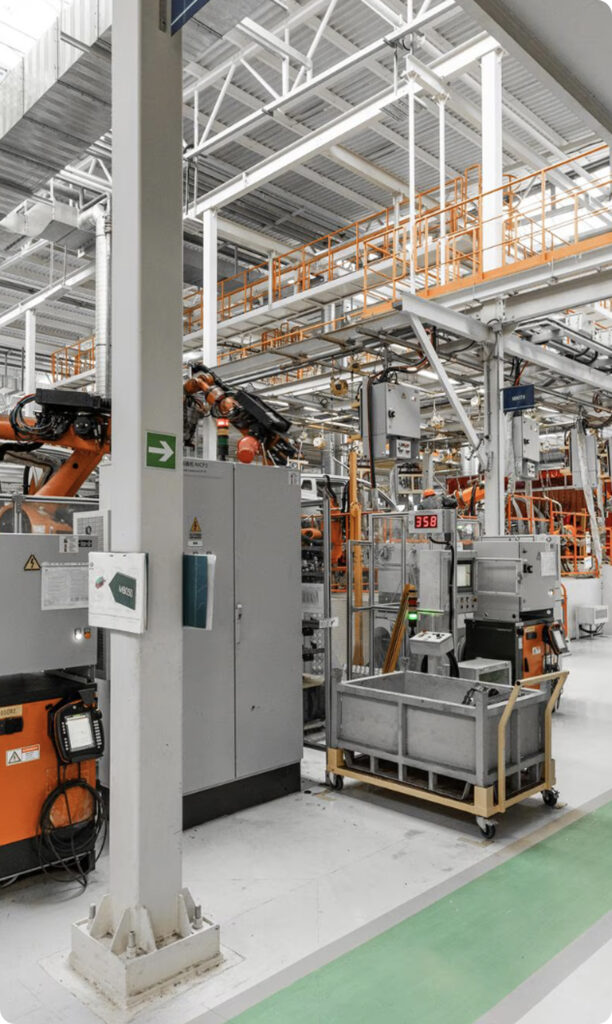
Each plant had its own IT infrastructure, but monitoring was local, inconsistent, and based mainly on manual actions by administrators. Incidents were detected with a delay – often only after being reported by production users or machine operators. There was also a lack of common escalation rules and predictable reactions to system performance degradation.
Solution
We implemented centralized monitoring of IT infrastructure and applications – based on Azure Monitor, Log Analytics, and Grafana – covering all 7 plants:
- Standardized metrics were configured (CPU, I/O, database availability, application error messages)
- Warning thresholds and automatic alerts were defined based on system criticality and plant operating hours
- An operational dashboard was created, available to the central team and local administrators
- Cyclic telemetry reviews and proactive actions were implemented – before an incident affects production
- Failure documentation included in runbooks, with predefined scenarios and a response matrix
Effects
- 91% of critical incidents detected before being reported by a user
- 52% decrease in production tickets
- The IT team could plan preventive actions for the first time – not just react
Head of IT
“This is the first time we have full insight into shipments across Europe in one tool. Integration with our clients works as it always should have.”
Do you want to sleep soundly, knowing that your systems are under control?
Every incident is not just a technical problem – it’s stress, cost, and loss of trust.
Don’t wait for the first serious downtime. Take the first step to secure your IT environment with a partner who understands the operational realities of logistics, transport, and production.
We can start with a free consultation, an architecture review, or a comparison of your current SLA with our standard. It costs nothing – and can save a lot.

Want to talk?
Leave your contact details or schedule a free consultation.
We will analyze your case, answer your questions, and assess the potential of IoT in your company. Start creating a system that finally works the way you need it to.
Your operating system for logistics is waiting – build it with us.

Kamil Fuss
Head of Business Development
Book a free consultation
If you are struggling with IT challenges, contact us to find out how we can help you.



Visit us on YouTube!
Subscribe to our channel so you don’t miss the latest trends in TSL digitalization, our clients’ case studies, and practical advice for logistics industry leaders