 Free consultation

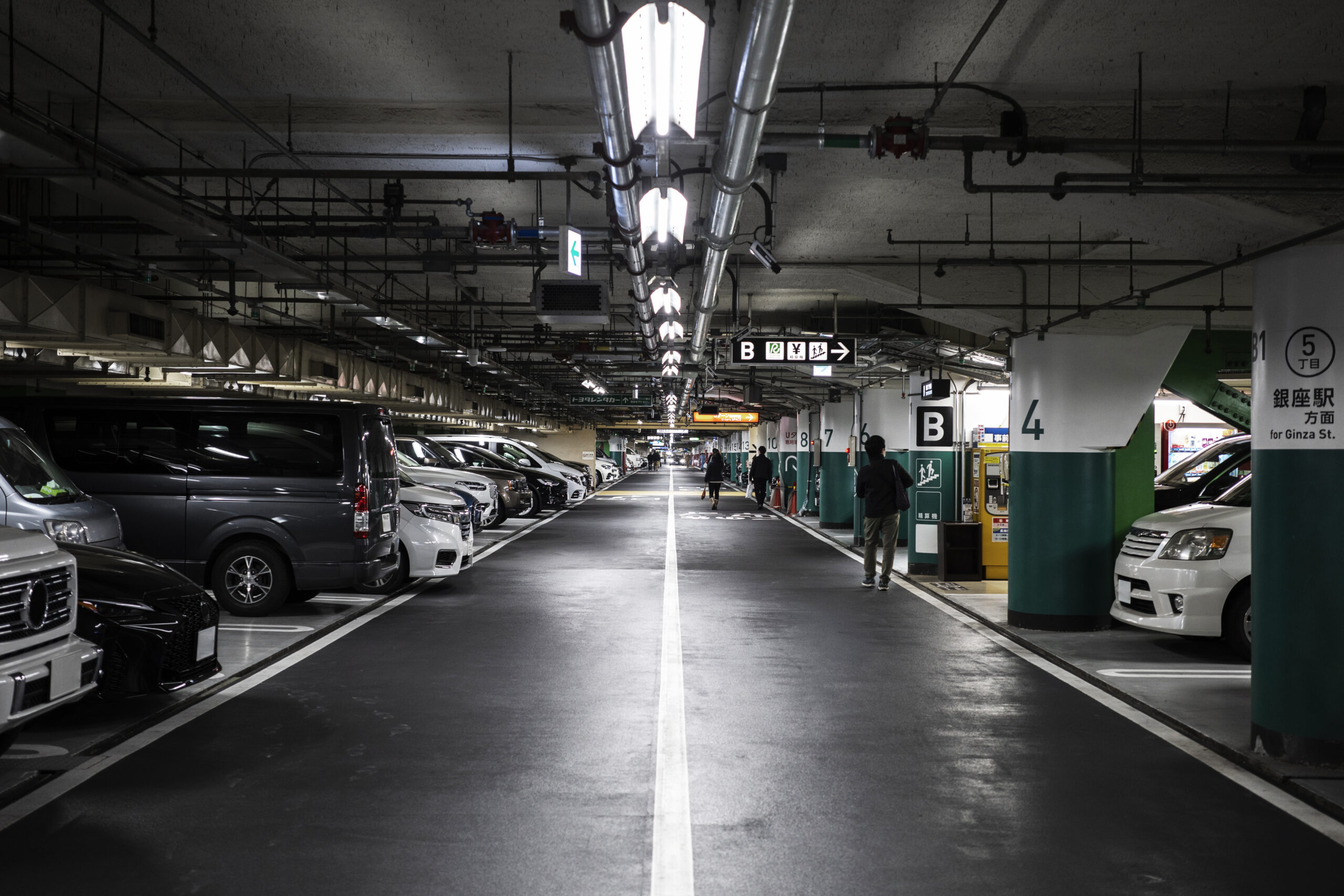
In the era of digital transformation and technological progress, parking space management is no longer just a matter of logistics. Increasingly, it is becoming an area where modern technologies, such as the Internet of Things (IoT) and Big Data, bring savings, improve efficiency, and offer a significant competitive advantage in the sector.
The global market for smart parking management systems is growing at a breakneck pace. According to forecasts, its value will increase from over $8 billion in 2024 to $42.7 billion in 2032, at an impressive compound annual growth rate (CAGR) of 21.1%. These systems include innovative technologies such as advanced sensors, cameras, IoT devices, and software platforms that allow for real-time monitoring of parking spaces, guiding drivers to available spots, and optimizing the use of parking space.
Smart parking solutions are widely used in commercial environments such as office buildings and corporate campuses. An example is EnBW (an energy company from the Baden-Württemberg region in Germany), which implemented systems using parking apps and real-time data for dynamic space allocation. Such solutions reduce the time employees spend searching for parking spaces, increasing work efficiency and workplace morale. Companies using these systems report a reduction in congestion and better space utilization by up to 50%, which translates into improved operations and employee satisfaction.
Another example of a great application of smart parking technologies is airports, characterized by high vehicle turnover and variable demand. Systems used in such locations utilize dynamic pricing models and the ability to reserve spaces in real-time via mobile applications, thereby improving space management and generating higher revenues. The implementation of such solutions increases occupancy rates by 20-30%, offering drivers a guarantee of space availability and the convenience of contactless payments.
In densely populated urban areas, smart parking systems help reduce congestion and exhaust emissions. Thanks to real-time monitoring technologies such as sensors and cameras, cities like Cologne in Germany have reduced traffic generated by drivers searching for parking spaces, which can account for up to 30% of urban traffic. These systems optimize space utilization and guide drivers to available spots, shortening search times and reducing CO2 emissions by approximately 1.3 kg per vehicle during a single search session.
IoT as a driver of innovation in parking management
The beginnings of Internet of Things (IoT) applications in parking management date back to the early 21st century, when the development of communication technologies and sensors made it possible to connect physical devices to the internet. The first solutions focused on streamlining the process of finding parking spaces and improving the efficiency of parking space management. Ultrasonic and magnetic sensors played a key role here, allowing for the detection of parking space occupancy. Thanks to these technologies, operators could monitor space availability in real-time and share this information with drivers.
One of the first noticeable applications of IoT in parking management was the introduction of smart information boards. Placed at parking entrances, these boards displayed the number of available spaces in real-time, which significantly facilitated decision-making for drivers. As mobile technology developed, applications also appeared that integrated data from these systems and allowed users to remotely check the availability of parking spaces. Although the algorithms managing this data were relatively simple at first, they opened the door to more advanced solutions.
Another significant step was the introduction of parking fee automation. The first cashless payment systems were based on terminals that allowed the use of contactless cards or mobile applications. Along with this, cameras recognizing license plates began to be used, allowing for completely automated fee calculation, eliminating the need for paper tickets. This innovative approach was particularly important in large cities, where fast and convenient parking is crucial for traffic flow.
Currently, smart parking solutions using IoT technology include hardware components such as parking meters and sensors, as well as software solutions providing analytics, integration with mobile applications, and cloud services.
From the user’s point of view, the use of IoT in parking management systems offers many possibilities:
- Real-time monitoring: IoT sensors detect parking space occupancy and transmit data to a central system. This approach reduces search time while simultaneously decreasing exhaust emissions in urban areas.
- Reservation systems: Users can reserve a parking space using a mobile application, which eliminates the stress associated with a lack of available spots.
- Personalized experiences: Modern systems offer features such as reminders about expiring parking time or directions to the nearest available spaces.
- Integration of systems with electric vehicle (EV) charging points,
IoT also plays a key role in integrating parking management with other elements of smart cities. Examples include dynamic parking pricing management systems that adjust fee rates based on real-time demand. This makes it possible to better manage parking occupancy and encourage the use of less congested areas. Additionally, data from IoT systems is used by city authorities to analyze traffic patterns, which helps in planning road infrastructure and transport strategies.
In summary, IoT applications in parking management currently cover a wide range of technologies and functions – from monitoring space availability and payment automation to integration with the smart city ecosystem and supporting electric mobility. These solutions not only improve user experiences but also contribute to more efficient and sustainable urban space management.
Big Data as an optimization tool
The history of Big Data application in parking management systems begins in the early 21st century, when basic automation based on electronic devices such as parking meters and automatic barriers was introduced. Data was collected on a limited scale, mainly regarding the number of available spaces; however, the lack of advanced analytical technologies prevented real-time optimization.
Between 2010 and 2015, with the development of Internet of Things (IoT) technology, parking occupancy sensors and cameras were introduced, generating vast amounts of data. Thanks to Big Data processing platforms such as Microsoft Azure Data Lake, it became possible to efficiently store and analyze this data, which initiated the development of mobile applications for checking space availability in real-time. In subsequent years (2015–2020), the application of machine learning algorithms allowed for predicting space occupancy based on historical and current data, and dynamic pricing systems responded to changing demand, for example, by increasing fees during peak hours. At the same time, parking systems began to integrate with public transport data, creating smart communication hubs.
Since 2020, parking management systems have become an integral part of Smart Cities, where integrated technologies such as monitoring, lighting, and security systems support efficiency and sustainable development. The use of Big Data analytics and cloud processing allows for optimal use of urban space, reduction of CO2 emissions, and flexible scaling of systems in response to user needs.
Today, the analysis of data generated by parking systems allows for data-driven decision-making and long-term planning. The most common applications include:
- Space optimization: Analyzing parking space usage patterns enables more effective management of available infrastructure.
- Dynamic pricing management: Based on supply and demand analysis, it is possible to introduce flexible pricing, which improves profitability.
- Trend forecasting: Historical data allows for predicting changes in user behavior, which helps in adjusting business strategies.
Examples of Big Data applications in parking management systems
ParkMobile is a popular application used in the United States that uses Big Data to enable users to easily book and pay for parking spaces. Thanks to integration with city systems and real-time data, the application allows drivers to quickly find available parking spaces, reserve them in advance, and pay for parking using a mobile phone. The system uses predictive analytics to forecast parking occupancy based on historical and current data, which minimizes time spent searching for a spot and improves traffic flow in cities.
In turn, Flowbird, developed in France, is a comprehensive system for real-time urban traffic data analysis that helps optimize urban parking management. Thanks to advanced algorithms and IoT sensors, Flowbird analyzes traffic flow and shows parking operators how to effectively use available spaces, while also providing users with information on space availability and allowing for quick payments via a mobile application.
Another example of Big Data application in parking management systems is the global platform ParkMe, which integrates data on available parking spaces in various cities around the world. Using dataset analytics, ParkMe offers users accurate information on parking occupancy, predicts availability at specific times of the day, and suggests alternative solutions in case of no available spaces. The platform is particularly valued by drivers in crowded metropolises, where searching for a parking space can be time-consuming, and the use of real-time data allows for a significant reduction in this process.
What is the future of Big Data solutions?
In the further development of parking management systems, the integration of these technologies with Smart Cities is of primary importance. Parking systems will be part of complex urban networks where parking data will be combined with traffic information, public transport, and urban infrastructure. This will enable dynamic traffic management, guiding drivers to the nearest available parking spaces via optimal routes, and better utilization of urban space.
The development of artificial intelligence (AI) will allow for even more precise predictions of parking space occupancy and real-time price optimization, which will further increase system efficiency. The introduction of even more advanced IoT sensors will enable real-time monitoring of parking conditions, and cloud data processing will ensure scalability and rapid access to information for users.
Furthermore, these systems will support sustainable urban development by reducing CO2 emissions and the time spent searching for parking spaces. In the future, we can also expect better integration with autonomous vehicles, which will automatically find and reserve parking spaces, as well as cooperation with blockchain-based payment systems, ensuring greater transparency and transaction security. Big Data solutions will also be used to analyze long-term trends in parking usage, helping cities in better public space planning and infrastructure investments.
ANPR/ALPR technologies for automation and security
The history of ANPR (Automatic Number Plate Recognition) and ALPR (Automated License Plate Recognition) technology has its origins in the 1970s in the United Kingdom, where it was designed to improve road law enforcement. In the 1980s and 1990s, this technology gained popularity, and its development was driven by progress in image processing and computers. The United States adopted ALPR technology in the 1990s, focusing on traffic law enforcement, traffic monitoring, and critical infrastructure protection. Modern ALPR systems integrate advanced artificial intelligence algorithms and cloud processing technologies, allowing for even more accurate recognition and data analysis.
Currently, ANPR/ALPR technology is used in many sectors, from parking space management to public safety and logistics, which proves its versatility and growing importance. According to a report by MarketsandMarkets, the global market for automatic number plate recognition (ANPR) systems is expected to reach $4.8 billion by 2027, with a CAGR of 9.3% during the forecast period. The dynamic development of this sector highlights the growing importance of technology in parking space management.
License plate recognition (ALPR) systems are becoming a standard in modern parking management. Their application contributes to:
- Automation of entries and exits: These solutions eliminate the need for tickets or access cards, which shortens service time.
- Improving security: ALPR records vehicles entering and leaving the facility, which facilitates control and identification of potential threats.
- Law enforcement: These systems monitor compliance with parking regulations, identifying unauthorized vehicles.
The Future of ANPR and ALPR Technology: Trends, Applications, and Challenges
ANPR (Automatic Number Plate Recognition) and ALPR (Automated License Plate Recognition) technologies have a dynamic future, driven by developments in fields such as artificial intelligence (AI), Internet of Things (IoT), cloud processing, and data analysis. Thanks to advanced machine learning algorithms, better accuracy in recognizing license plate numbers will be possible in difficult conditions, such as poor lighting or unusual viewing angles. The introduction of real-time processing will improve system efficiency, which is particularly important in traffic monitoring and parking management. Integration with IoT devices and smart city infrastructure will enable traffic monitoring, parking zone management, and increased security. In this context, the importance of cloud solutions is growing, as they will allow for scalable data processing and easy access from anywhere.
Another important aspect will be the development of security in terms of privacy and data protection, which is crucial in the context of regulations such as GDPR. Systems will have to implement encryption and anonymization mechanisms to protect users from data misuse. At the same time, this technology will find application in autonomous vehicles, improving their interaction with road infrastructure. Both the public and private sectors will use ANPR/ALPR, supporting traffic monitoring, law enforcement, parking automation, and contactless payment systems.
Furthermore, these technologies will play a significant role in big data analysis, providing information helpful in forecasting traffic intensity or optimizing spatial planning. In the future, we can also expect better integration of ANPR/ALPR with analytical systems, allowing for the prediction of traffic events and optimization of urban infrastructure. Despite the huge potential, these technologies face challenges such as the diversity of license plate formats, high implementation costs, and the need for compliance with legal regulations. However, with appropriate development and investment, ANPR/ALPR have the chance to become the foundation of modern urban and road infrastructure.
Economic benefits and competitive advantage for companies in the TSL sector
The implementation of smart parking systems for companies and public supervisors implementing these solutions brings tangible benefits:
- Reduction of operating costs: Automation of processes, such as fee collection or access control, reduces the need for hiring personnel.
- Increased customer satisfaction: Faster and more intuitive parking improves the user experience, which can attract more customers.
- Better business decisions: Access to detailed analysis enables informed decision-making regarding infrastructure management and development.
Best examples of parking management system implementation
Operational efficiency and service quality
Assured Technologies, in cooperation with the software house IT-Solve, developed the Go Plan system for managing airport parking lots. The project was completed in a short time, replacing an outdated solution with a modern system enabling automation and integration with other tools. The result was streamlined customer service and increased operational efficiency of airport parking lots.
Operational efficiency
Data-driven parking management systems significantly reduce administrative burden. JPMorgan Chase reported a 40% drop in parking-related administrative tasks after implementing a big data-based solution.
Environmental care
By optimizing parking allocation and reducing search time, smart parking management systems significantly reduce carbon dioxide emissions. A case study at the LEED Platinum-certified Bank of America Tower in New York showed an annual reduction in carbon dioxide emissions of 372 tons – equivalent to planting 6,000 trees – thanks to data-driven parking optimization.
Tips for urban planners
The wealth of data generated by modern office parking management systems provides invaluable information for urban planners. In Singapore, data from corporate parking lots contributed to the development of new communication routes, reducing overall traffic intensity by 15%.
Dynamic management of parking spaces and prices
Advanced algorithms analyze historical data and current demand, introducing dynamic pricing models. For example, the implementation of such a system on the Google campus in Mountain View reduced the time employees spent searching for parking spaces by an impressive 43%, while simultaneously increasing parking revenue by 20%.
Predicted occupancy analysis
Using machine learning and historical data, office parking management systems can now predict parking space demand with extraordinary accuracy. Microsoft’s headquarters in Redmond saw a 28% increase in parking efficiency after applying predictive analytics.
Increased customer satisfaction
Data-driven insights have revolutionized the end-user experience. The Amazon office complex in Seattle reduced the number of parking-related delays by 35% thanks to a mobile application that provides real-time information on space availability and personalized recommendations.
What is the future of parking management systems?
The implementation of modern technologies such as IoT, Big Data, and ALPR is redefining parking management standards. For companies in the TSL sector, investing in these innovations is not only an opportunity for operational optimization but also a step toward building a competitive advantage in a demanding market.
Standing on the threshold of further technological progress, the future of data-driven office parking management seems limitless:
Integration with autonomous vehicles
Innovative companies like Tesla are developing office parking management systems where autonomous vehicles communicate directly with the parking infrastructure, promising to reduce parking time to a minimum.
Artificial intelligence for hyper-personalization
New AI technologies promise a revolution in office parking management, offering hyper-personalized solutions. IBM’s facility in New York is testing an AI-based system that learns individual parking preferences and proactively reserves optimal spaces based on employee schedules and historical data.
In summary, the integration of big data analytics in office parking management represents a qualitative leap in efficiency, sustainability, and user satisfaction. As organizations increasingly recognize the numerous benefits of data-driven solutions, we stand on the threshold of a new era of parking management – an era characterized by unprecedented optimization, environmental care, and seamless integration with the broader urban mobility ecosystem.

